

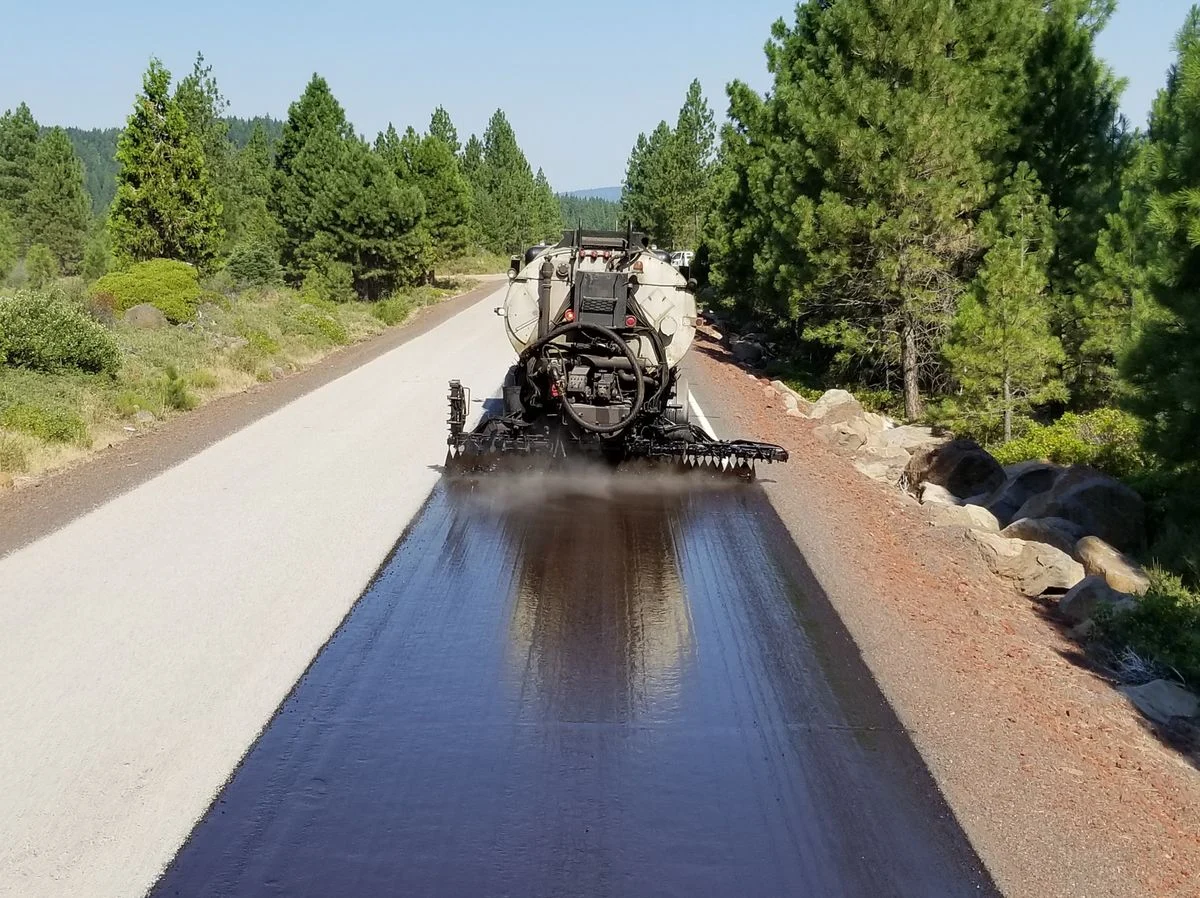
The tack coat is the thinnest layer on any paving job, yet it carries one of the heaviest responsibilities. Spread at the wrong rate, the bond between the old surface and the new asphalt lift will fail within months, and the new mat will slide, delaminate, or reflect every crack from the layer below. Spread too thick, the excess asphalt migrates to the surface of the new lift, where it bleeds, softens under traffic, and turns a well-designed pavement into a slippery, rutted one. Setting the right tack coat application rate — in litres per square metre — is therefore a small calculation with very large consequences. This guide walks through the engineering steps that professional crews use to choose and verify the correct rate.
Why the Application Rate Matters
A tack coat is a thin film of asphalt emulsion sprayed between an existing surface and a new asphalt lift. Once the emulsion breaks, the water evaporates and leaves behind a continuous asphalt film that bonds the two layers together so they behave as a single pavement under traffic. If that film is too thin, the bond is uneven and the upper lift slips, producing slippage cracks, shoving, and early fatigue. If the film is too thick, free asphalt rises into the new mix during placement, leaving the surface over-asphaltised: bleeding, loss of skid resistance, and a tendency to rut in warm weather. Field experience and decades of laboratory shear testing both point to a residual asphalt rate of roughly 0.15 to 0.40 litres per square metre for the vast majority of pavement jobs, with the exact number set by the surface underneath.
Match the Rate to the Surface Type
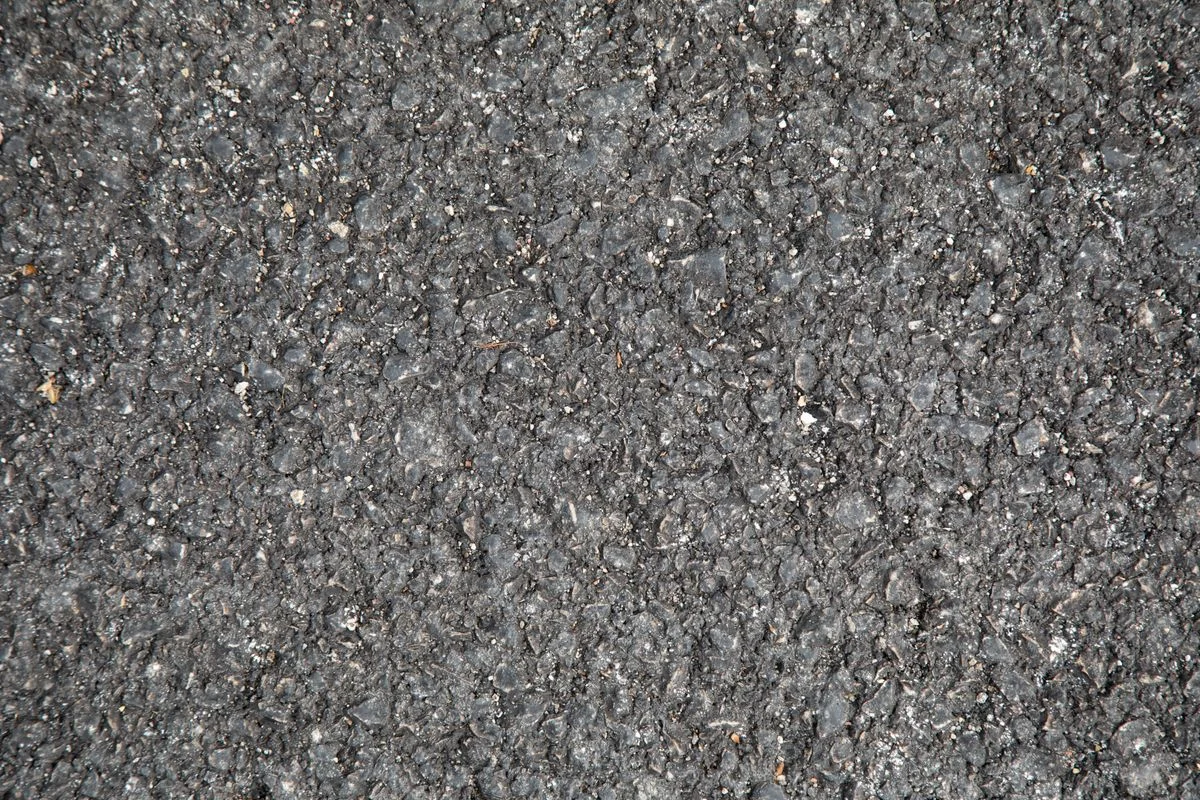
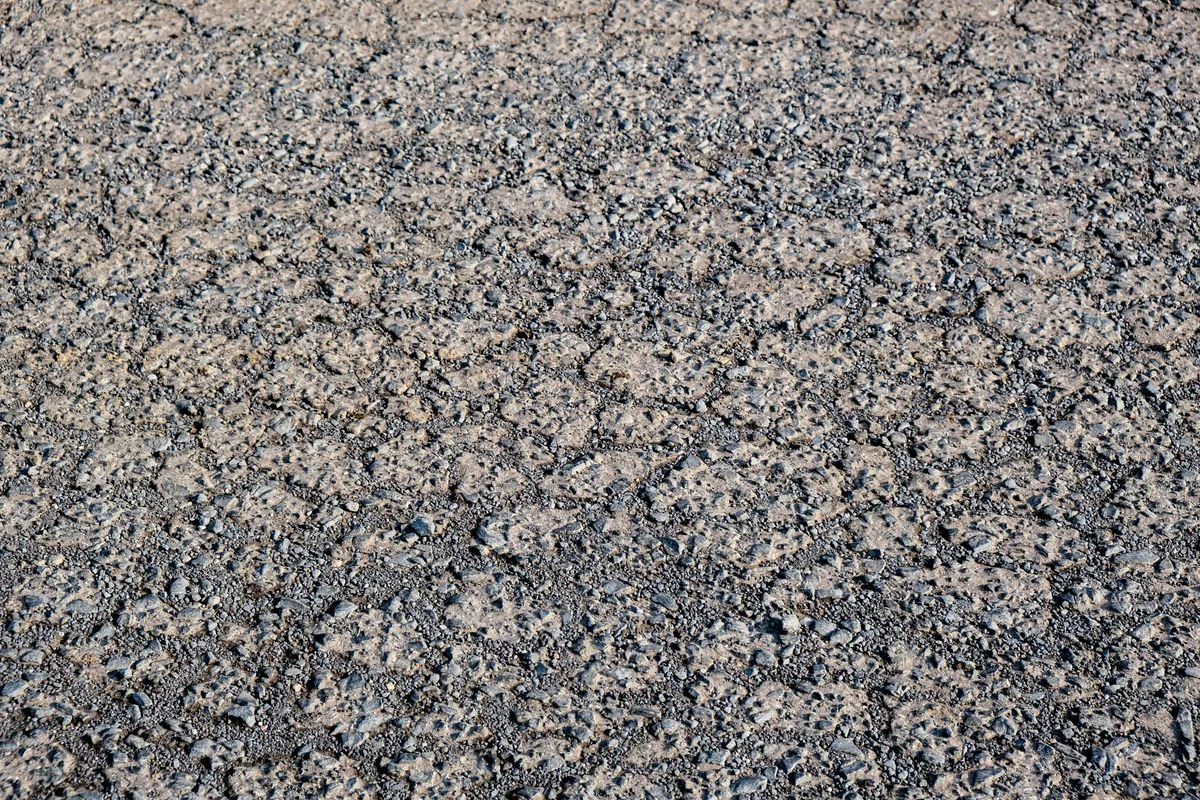
The single biggest variable is what is already on the road. A smooth, dense, well-aged asphalt surface offers little texture for the emulsion to grip, so it only needs a light film. A freshly milled surface is open and porous, so it drinks more emulsion before the film is continuous. Portland cement concrete absorbs even more, especially if it has been textured. A typical engineering starting range, expressed as residual asphalt, looks like this:
- Smooth, existing HMA — 0.15 to 0.25 L/m²
- New HMA base (open texture) — 0.20 to 0.30 L/m²
- Milled or cold-planed surface — 0.25 to 0.40 L/m²
- Portland cement concrete — 0.30 to 0.50 L/m²
- Granular, untreated base (prime coat) — 0.60 to 1.40 L/m²
These ranges are widely used by state DOTs across the United States, by the AASHTO standard specifications, and by most national pavement authorities. The published values are always stated as residual asphalt, never as the volume of emulsion coming out of the spray bar.
Always Calculate from Residual Asphalt, Not Emulsion Volume
Asphalt emulsion is about 55 to 65 percent asphalt binder, with the rest being water and a small charge of emulsifier. That water has to evaporate before the film does its job, so the meaningful number on the gauge is the residual asphalt, not the wet volume. The conversion is straightforward:
Emulsion spray rate = Target residual rate ÷ Residue content
For example, a target of 0.25 L/m² on a smooth existing surface, using a CRS-2 emulsion with 65 percent residue, calls for 0.25 ÷ 0.65 = 0.38 L/m² of wet emulsion at the bar. Use the residue value from the supplier’s Certificate of Analysis rather than a generic data sheet figure, because the residue of an emulsion can shift by a few points between batches and over storage time.
Adjust for Weather, Traffic, and Open Time
The base rate is only a starting point. Hot, dry, breezy weather breaks the emulsion fast, so a slightly lighter rate will still leave a uniform film. Cool, humid mornings slow the break, and the surface stays tacky for longer; a higher rate in that window risks pickup by construction equipment. Heavy traffic on the underlying layer — especially channelised truck traffic — calls for a slightly heavier residual rate so the bond survives the higher shear. Open time matters too: if the overlay cannot be placed the same shift, the tack coat can be contaminated by dust or construction traffic, and a light re-spray or full re-spray may be needed before the paver returns.
Calibrate the Distributor Before the Job
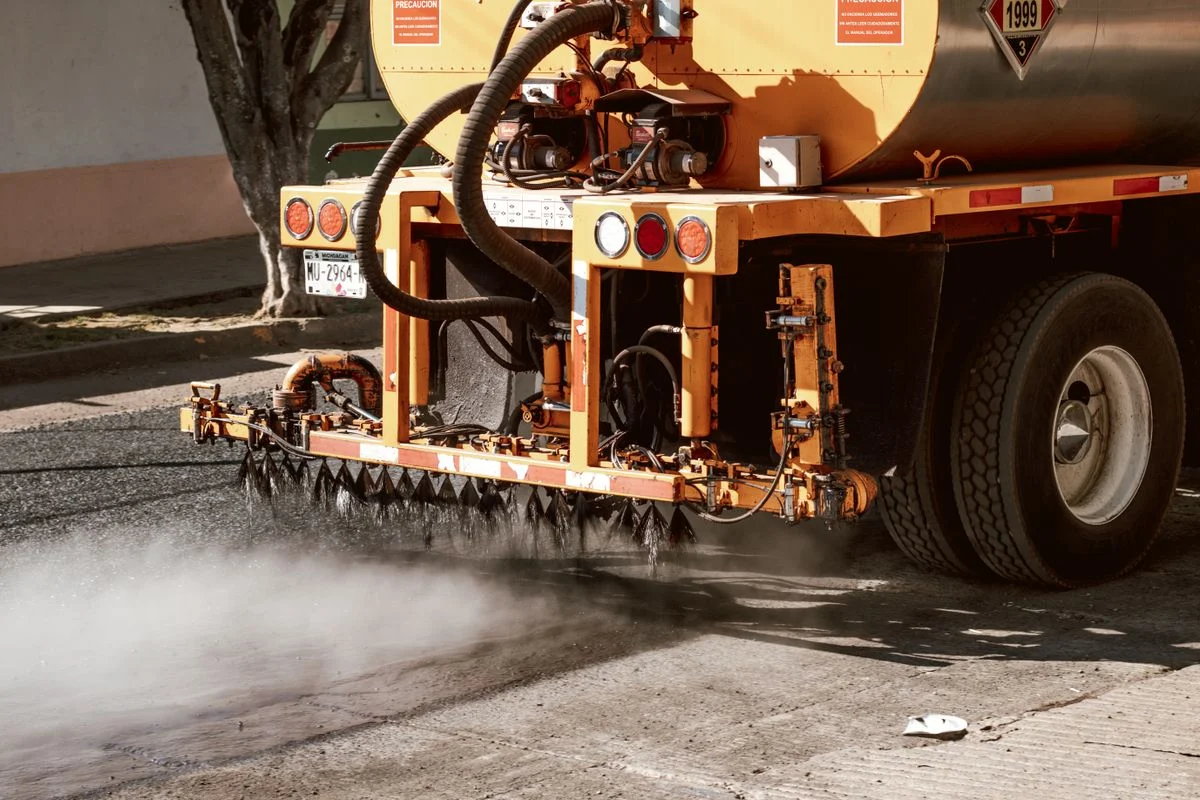
The number on the design sheet is only as good as the machine that delivers it. Before the first truck arrives on site, the asphalt distributor should be calibrated for the exact emulsion and the exact width of spray. The basics of a good calibration:
- Inspect every nozzle for wear, clogging, and a clean fan pattern; replace any nozzle that sprays a streak rather than a fine mist.
- Set the spray bar height so that the fan patterns from adjacent nozzles overlap by about one third at the surface — typically 250 to 300 mm above the pavement.
- Set the pump pressure and ground speed together, so the bar pressure stays in the manufacturer’s recommended window at the design application rate.
- Heat the emulsion to the supplier’s recommended spray temperature (typically 50 to 85 °C for CRS grades; ambient for SS grades).
A simple catch-pan test along a measured length of spray bar confirms the actual delivery in litres per minute. Cross-check the figure with the truck’s flow meter: they should agree within five percent.
Verify the Application Rate on Site
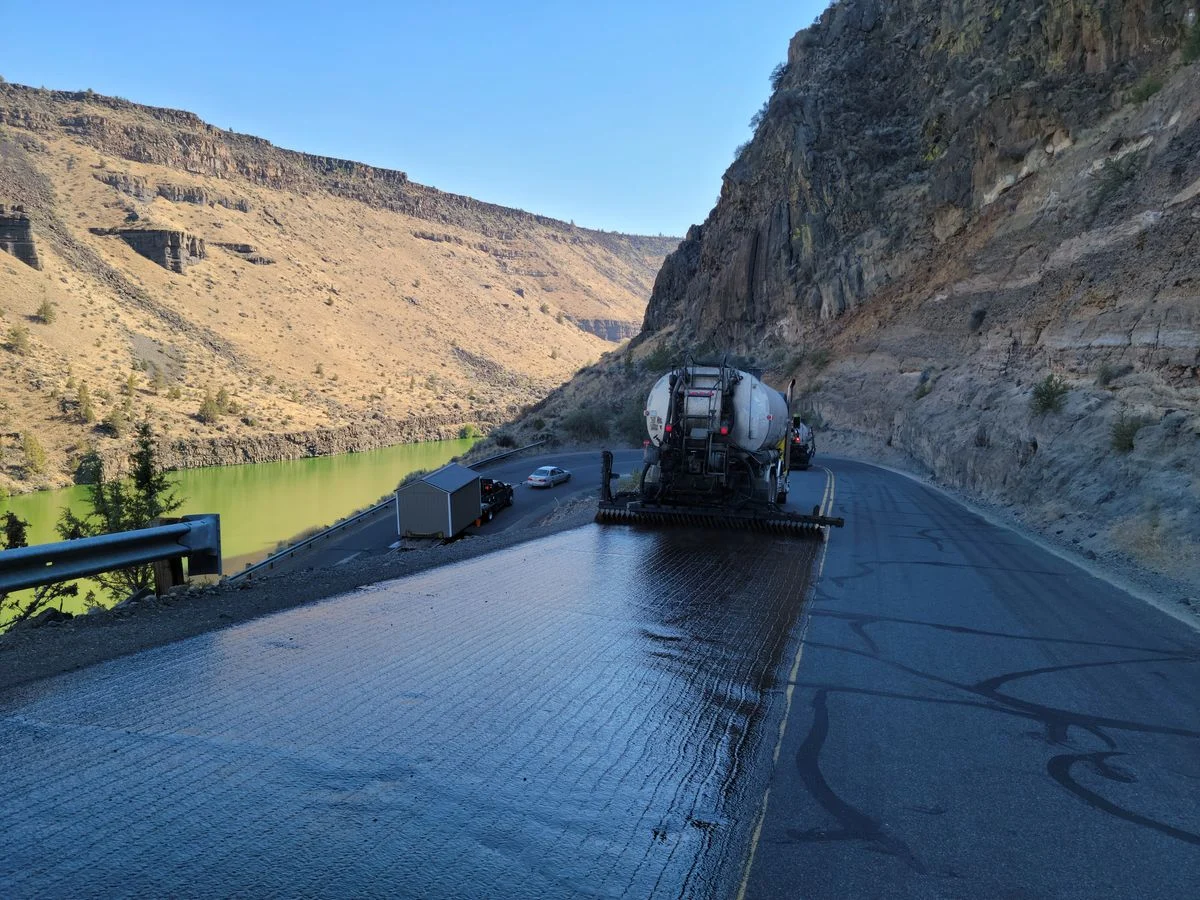
Calibration is what the truck should be doing; verification is what the road actually sees. Lay absorbent pads of a known surface area on the pavement before the truck passes, weigh them before and after, and the difference gives a real measurement of L/m² delivered. Repeat at three or four points across the spray width. Walk the freshly sprayed surface: the film should be a uniform chocolate brown to black, with no reflective puddles, no dry streaks, and no white spots where the emulsion has not yet broken. The emulsion is ready for the paver when the colour has shifted from brown to black and the surface is tacky to a fingertip but no longer picks up on a gloved hand.
Choose the Right Equipment for the Job
Consistent rate control across a full day of paving is not a question of operator skill alone — it is a question of the distributor in front of them. A modern asphalt distributor with computer-controlled flow, ground-speed-compensated output, and a heated, agitated tank holds the design rate to within a tenth of a litre per square metre from the first minute of spraying to the last. Hand-lance attachments allow spot-work around manholes, kerbs, and odd corners, while variable-width spray bars let the same machine cover a two-lane road and a single-lane ramp without re-calibration. At ZOOMMA, our asphalt distributor line is engineered around exactly these controls, so the rate on the design sheet is the rate that hits the pavement. Talk to our team about the right tank size, spray-bar width, and options for your next project, and explore the full ZOOMMA range to see how each machine supports consistent bond-coat application in the field.