

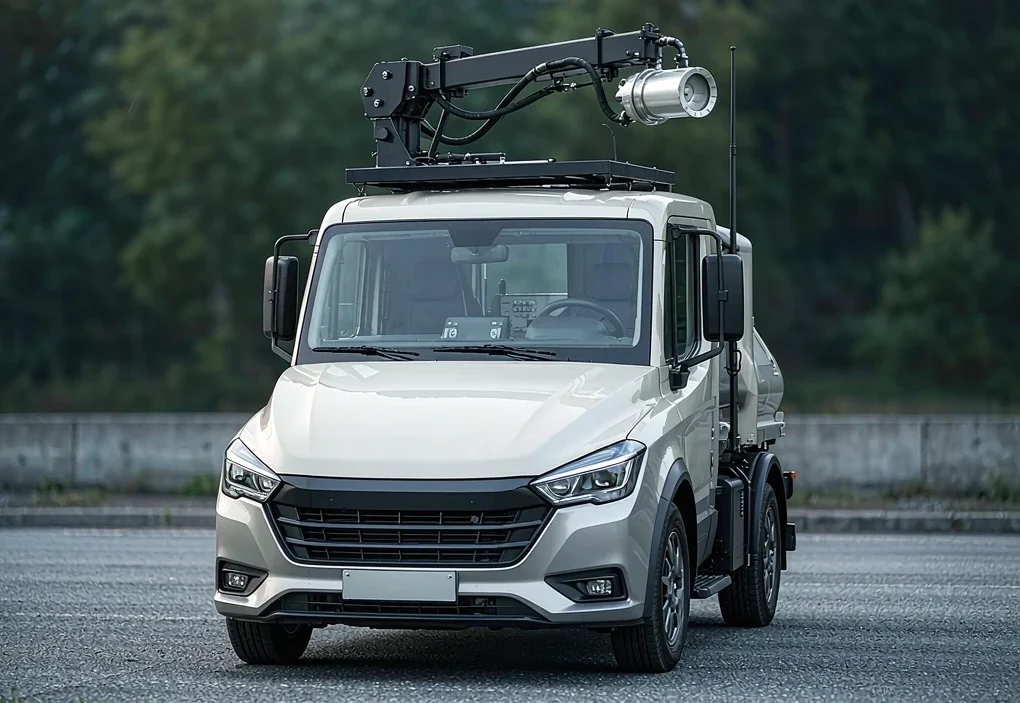
Introduction: Why LHD vs RHD Matters for Procurement
When sourcing road construction machinery for export, one specification can quietly change everything: left-hand drive (LHD) versus right-hand drive (RHD). Get it wrong and a machine becomes illegal to register, expensive to convert, or impossible to resell in the target market. Get it right and the unit arrives ready to work on day one.
This guide explains how the LHD and RHD split affects vehicle procurement, and what to check before you place an order.
What Are Left-Hand Drive and Right-Hand Drive?
The terms describe the side of the cab where the steering wheel is mounted, which matches the side of the road a country drives on:
- Left-hand drive (LHD): the steering wheel is on the left side of the cab. Vehicles drive on the right side of the road.
- Right-hand drive (RHD): the steering wheel is on the right side of the cab. Vehicles drive on the left side of the road.
The Global Market Split
Knowing which markets need which configuration is the first step in any procurement plan:
- LHD markets (drive on the right): China mainland, the United States, Canada, Mexico, continental Europe, the Middle East, and most of Africa, Central Asia and South America.
- RHD markets (drive on the left): the United Kingdom, Ireland, Australia, New Zealand, Japan, India, Pakistan, Bangladesh, South Africa, Kenya, Tanzania, Malaysia, Singapore, Thailand, Indonesia and several other Southeast Asian and East African countries.
If your target country is on the RHD list, ordering a standard LHD machine will not work — it cannot be legally registered there.
How LHD vs RHD Affects Your Procurement
1. Legal Compliance and Registration
The most immediate impact is legal. Many RHD countries simply will not register an LHD vehicle for commercial road use, and vice versa. Confirming the required configuration before ordering avoids a machine that is stranded at the port or useless on the road.
2. Cost and Lead Time
RHD machines are usually a special-order configuration for most Chinese manufacturers, whose domestic production is LHD by default. Expect a longer lead time and a higher unit price for RHD, because the cab, dashboard, controls and sometimes the chassis routing must be reworked.
3. Chassis and Cab Rework
Converting from LHD to RHD is not a simple mirror swap. It involves relocating the steering column, pedals, dashboard layout, gear shifter, mirror setup and door configuration. A factory-built RHD unit is always more reliable and cheaper in the long run than an aftermarket conversion.
4. Resale Value and Market Flexibility
An LHD unit holds strong resale value in LHD markets but is hard to sell into RHD markets, and the opposite is also true. Buying the right configuration for your primary market protects your asset value.
5. Operator Safety and Habits
Drivers trained on one configuration take time to adapt to the other, and misjudging traffic positions is a real safety risk. Matching the drive side to local practice keeps operators safe and productive from the first shift.
LHD vs RHD at a Glance
| Factor | LHD | RHD |
|---|---|---|
| Steering wheel side | Left | Right |
| Drives on | Right side of road | Left side of road |
| Typical markets | China, US, EU, Middle East | UK, Australia, Japan, India, East Africa |
| Availability from Chinese OEMs | Standard, short lead time | Special order, longer lead time |
| Relative cost | Lower | Higher |
Procurement Checklist Before You Order
- Confirm the target country’s driving side and registration rules with your local importer or transport authority.
- State the required configuration clearly (LHD or RHD) in the purchase contract and proforma invoice.
- Ask the manufacturer whether RHD is factory-built or done as an aftermarket conversion — insist on factory-built.
- Request cab photos showing the steering wheel position before production begins.
- Plan for the longer lead time and higher cost if you need RHD.
- Verify the lighting, mirrors and instrumentation meet the target market’s homologation standards.
ZOOMMA Supports Both LHD and RHD Configurations
ZOOMMA road maintenance machinery — asphalt distributors, road sweepers, crack sealing machines and asphalt recyclers — can be supplied in both left-hand drive and right-hand drive configurations to match your market. Our factory-built RHD units comply with the registration and homologation requirements of the UK, Australia, East Africa, South and Southeast Asia, and other RHD markets.
Contact our sales team with your destination country and we will confirm the correct drive configuration, lead time and quotation before you commit.
Conclusion
Left-hand drive versus right-hand drive is not a minor detail — it determines whether your machine is legal to operate, how much it costs, how long it takes to arrive, and how well it holds its value. Check the configuration first, put it in writing, and source from a manufacturer that builds both LHD and RHD units at the factory. Get this one decision right, and the rest of your procurement runs far more smoothly.